Nashville's Best Bat Removal
We've been voted Nashville's best bat removal company the past two years!
Get in touch
Bat Experts
Rapid Response
Trained & Educated
Licensed & Certified
About Nashville Bat Removal
Welcome to nashvillebat.com. We are the only qualified bat removal company in Nashville, Tennessee. We are a professional wildlife company that specializes in bat removal and control. For over the past two decades, we have provided bat assessments, bat exclusion, and bat prevention services to residential and commercial clients. Having bats around can be a good thing as they feed on harmful insects, like mosquitoes, on your property. However, a bat in your attic will soil the insulation with its dropping (guano). Dried bat guano also puts humans at risk of histoplasmosis, a type of lung infection that can be fatal if left untreated. Bat removal is specialty work that requires an adept understanding of bat behavior. For one, exclusion work can only take place within a specific period. Performing exclusion while bats may be breeding will trap young bats in your attic, and they'll eventually die. Our bat assessment process involves us sending an experienced service specialist to assess your roof to confirm the location and presence of the bats, and most importantly, determine the feasibility of exclusion. Thereafter, we give you a full written report with our recommendations and quotations. Our bat exclusion work entails safely removing the bats from their roosting site through one-way valves. We then permanently seal all entry holes used by the bats. But what sets us apart is our emphasis on bat prevention. We implement strategies in place to deter bats from roosting in your house. For instance, we place a strong PVC mesh or rhino board at the point where the roof meets the wall to prevent bats from hanging on the eaves. When you work with us, you can be guaranteed we'll take care of the entire process. We operate 24-7-365, so don't hesitate to call us at 615-560-1373 to discuss your bat problem and schedule a fast appointment.
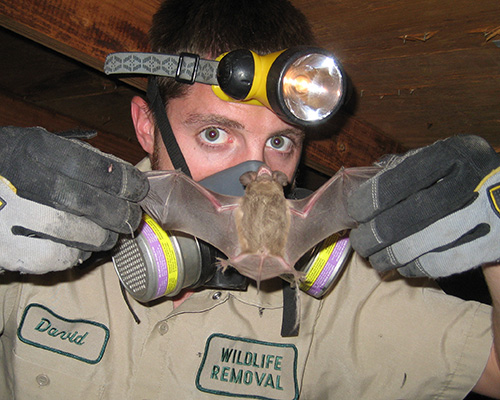
Residential
We are experts at removing bats from residential properties. Whether you have a single bat trapped in your house, a colony roosting in your attic, and/or various other problems, there is no need to worry! During our removal process, we make sure to inspect your entire home carefully, tracking down all the entrypoints bats are using to invade your place. Next, we perform a process called live exclusion (where no bats are harmed and all exit your property), then seal all entry holes completely shut. We also take care of the cleanup process after, so your home is safe and clean!
Learn MoreCommercial
Besides residential areas, we also have a wealth of experience removing bats from commercial properties! We begin by investigating the area for possible bat entrances, covering holes even as small as 1/4 of an inch. Through our live exclusion process, bats leave the building through one-way exits, and we seal up every hole afterward. Once the bats have been removed, we perform a cleanup process. This includes dealing with guano, replacing damaged insulation, and decontaminating the place.
Learn More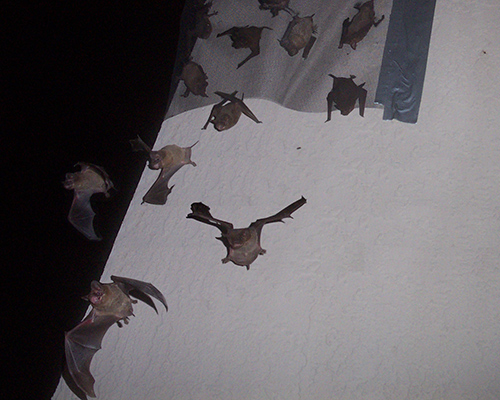
Contact us for bat removal today!
What Our Customers Say
I had a bat flying around in my house at 9pm, and CITY bat removal came right out and caught it in a net.
Sarah Lakewood
I had an annoying colony of bats stuck in my attic for a while before I finally decided to call for help. They were able to quickly and thoroughly solve the problem!
Brandon Chung
They did a great job clearing my attic of bats and didn't hurt any of the creatures.
Charlotte Demers
The technicians at CITY Bat Removal are skilled, professional, and know exactly what they're doing. Would highly recommend.
Mark O'Connor
My house stank of bats and their guano inside my wall. CITY Bat Removal not only removed the bats, they also got rid of the smell!
Alexis Ramirez
.jpg)
What Is Echolocation And How Do Bats Use It?
Echolocation is similar to sonar radar. It basically entails using high-frequency sound waves to communicate and create images. Echolocation is used by many mammals to communicate and find prey.
These high-frequency sound waves must be loud enough to return to the sender and short enough to do so before the next one goes out. The returning echoes give bats an image of the environment or the prey they are hunting.
Bats do have good eyesight, but they depend on echolocation to navigate and hunt prey. Bats have a concentration of receptor cells in their inner ears which helps them detect the smallest changes in frequency. Their ears are sensitive enough to pick up the high-pitched pulses which are inaudible to humans. They are also structured specifically to aid in the reception of echoes and sounds emitted by prey.
These pulses are deployed and interpreted at an impressive amount of two-hundred pulses per second. This makes it possible for bats to engage in echolocation activities during flight, allowing them to hunt prey even in the air.
Interpreting Echolocation
Donald griffin was the first to conclusively determine that bats use echolocation techniques and he coined the phrase. Most bats perform echolocation pulses with their mouths by contracting their larynx. However, there are some who send these pulses out through their noses by clicking their tongues.
Bats can use echolocation to avoid objects as thin as a piece of thread in their environment. They also use echolocation techniques to identify the size of objects and capture prey such as flying insects.
There are more than eight-hundred different species of bats around the globe. Each species utilizes different frequency patterns which allows researchers to identify different bat species through echolocation, even in dark places.
Using Echolocation
Some of the insects that bats hunt can hear the echolocation pulses bats emit. When they do, you will notice a marked change in behavior as they attempt to avoid the predator. Some will fly in a zig zag pattern while others turn and fly the other way.
Whales, dolphins and other marine mammals also use echolocation to communicate and hunt under water. Scientists have studied these activities for many years. Some people who have lost their eyesight have even developed echolocation techniques to communicate and interpret the location of objects in their environment.
Underwater sonar used by the military and in submarines was developed by studying the way animals utilize echolocation activities. However, echolocation in animals involves using an auditory imaging system to develop a three-dimensional picture of an object or prey.